
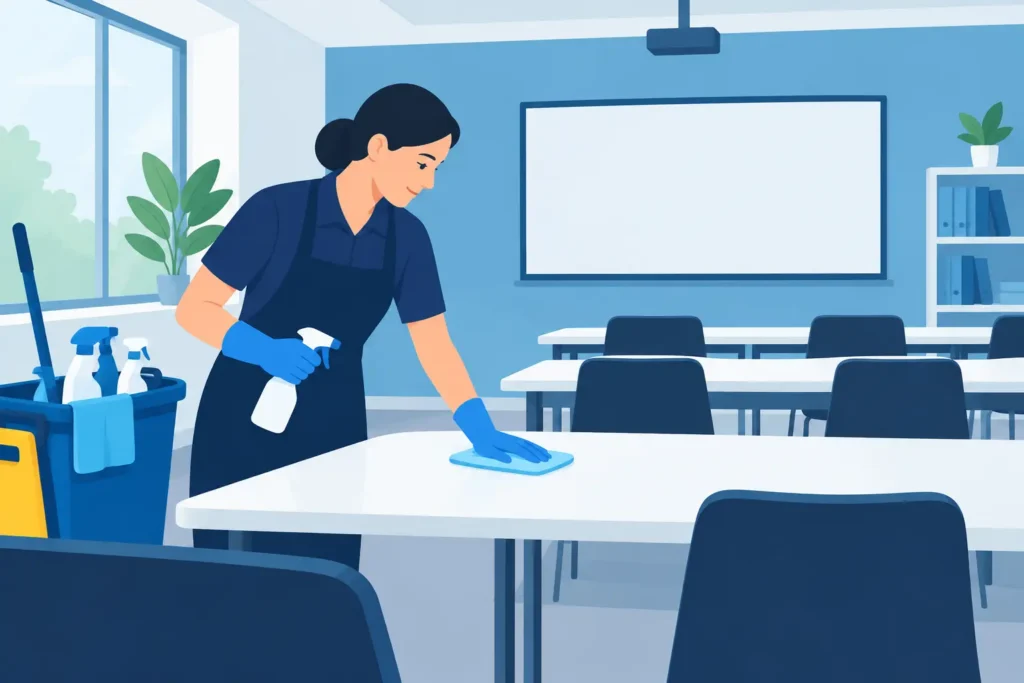
A training provider cleaning guide should begin where the day-to-day pressure is felt: the classroom door opening before the first student arrives, a practical room used by several groups, or an auditor walking through shared amenities. For Registered Training Organisations, cleaning is not simply about a tidy building. It supports a professional learning environment, safer shared spaces and the confidence of students, trainers, visitors and compliance managers.
RTOs operate differently from standard offices. Training may run early, late or across weekends. Students move between classrooms, reception areas, computer rooms, kitchens, workshops and amenities. Numbers can change from one intake to the next. A cleaning service needs to account for that activity without creating disruption or leaving essential tasks incomplete.
Start with the way your RTO actually operates
The most useful cleaning plan reflects the site rather than relying on a generic checklist. A small business college with computer-based classrooms will have different priorities from a trade training provider with practical areas, lockers and high student turnover. Both need a clean, presentable facility, but the risks, surfaces and cleaning frequency may differ.
Begin by mapping the spaces used during a normal week. Consider which rooms are open to students, which are staff-only, where food is prepared or consumed, and which areas receive the heaviest foot traffic. Reception counters, door handles, light switches, shared keyboards, bathrooms and kitchenettes often require closer attention than low-use meeting rooms.
It also helps to identify periods when the building is quiet. Many RTOs benefit from cleaning outside class times so students and trainers can work without interruption. Others need a daytime touch-up of amenities or entry areas, particularly during high-enrolment periods. Flexible scheduling matters because the best cleaning time is the one that supports your timetable, not the cleaner’s convenience.
Set standards that people can see
A clean training facility creates an immediate impression. Students are more likely to feel confident in an organised, well-maintained environment, while visiting employers, assessors and auditors see that the provider takes its operations seriously. Presentation should extend beyond a quick vacuum and emptied bins.
Clear standards make expectations easier to manage. Rather than asking for a site to be cleaned generally, define the end result for key areas. For example, classroom floors should be free of visible debris, desks should be wiped and arranged appropriately, amenities should be hygienic and stocked as agreed, and reception glass should be free from marks. This gives both the RTO and its cleaning provider a practical reference point.
A dependable provider should be willing to accommodate site-specific duties where they are sensible and clearly agreed. That may include cleaning whiteboards, wiping down shared training equipment, managing rubbish after an event, or giving additional attention to a room used for enrolment interviews. The scope should remain realistic. Specialist equipment, hazardous materials and highly technical workshop cleaning may require a separate process or specialist advice.
High-touch points need a routine
High-touch surfaces are easy to overlook because they are small, but they are used constantly. A reliable routine should cover door furniture, counter surfaces, shared desks, taps, toilet flush buttons, appliance handles and common technology touchpoints where appropriate. In computer rooms, cleaning methods should suit the equipment and avoid excessive moisture.
The required frequency depends on attendance, room use and the season. A high-volume campus may need more frequent attention to amenities and entry points than a low-traffic training suite. What matters is that the routine is reviewed when enrolments, delivery modes or operating hours change.
Use this RTO cleaning guide to protect daily operations
Cleaning supports compliance and presentation standards, but it is not a substitute for an RTO’s broader governance, work health and safety or facilities obligations. It is one practical part of maintaining a safe and orderly premises. Keeping duties documented and regularly checked helps managers demonstrate that cleaning has been considered as part of normal site operations.
A practical service specification should cover these six areas:
- Classrooms, including floors, desks, bins, boards and high-touch surfaces.
- Reception and common areas, including entry glass, seating, counters and presentation points.
- Amenities and kitchenettes, with agreed hygiene tasks, rubbish removal and consumable checks.
- Computer rooms or specialist learning spaces, using suitable methods for the surfaces and equipment.
- Practical rooms, storage areas or workshops, with duties tailored to the activity carried out there.
- Periodic tasks such as internal glass cleaning, detailed skirting and spot cleaning of marks.
Documenting these tasks does not need to create unnecessary administration. A clear schedule, a site-specific scope and regular communication are usually more valuable than an overly complicated file. The objective is simple: everyone should know what is being cleaned, when it is being done and who to contact if needs change.
Choose accountability, not just a cleaning quote
The lowest initial quote can become expensive if tasks are missed, cleaners change constantly or the site manager spends time following up. RTO managers need a provider that turns up as agreed, understands access requirements and communicates clearly when an issue arises.
Ask how attendance is recorded at each site and how completed work is checked. Technology-tracked check-in and check-out provides an additional level of accountability, particularly for after-hours services when no RTO staff are present. It can also assist with risk management if access to the building needs to be confirmed.
Staff suitability matters as well. Training providers are responsible for welcoming students and visitors into their premises, and many organisations share buildings or operate near childcare and community services. Cleaning teams should be trained, professionally presented and appropriately vetted. Police-checked staff provide added reassurance, while Working With Children Checks may be relevant where cleaning arrangements involve education or childcare environments.
End-result billing is also worth discussing. When a provider quotes a defined outcome rather than relying solely on hours, the conversation stays focused on the standard your site needs. It reduces uncertainty about billing and makes it easier to assess whether the agreed work has been delivered.
Plan for audits, events and changing enrolments
A cleaning program that works in a quiet term may not suit an audit week, open day or a new student intake. These periods place extra pressure on reception areas, bathrooms, walkways and meeting rooms. Planning ahead allows additional cleaning duties to be arranged before the site is under scrutiny.
Before an external visit, focus on the spaces a visitor is most likely to see first: entry paths, reception, accessible amenities, classrooms, staff work areas and meeting rooms. Check for overflowing rubbish, dusty ledges, fingerprints on glass, worn presentation materials and clutter. Cleaning cannot solve every facilities issue, but it can ensure the premises looks cared for and ready for use.
For larger changes, such as expanding into another floor or adding a practical training room, request a fresh inspection. The original scope may no longer reflect the number of rooms, student movements or cleaning requirements. A provider that inspects the site before quoting is better placed to recommend a practical schedule than one working from a brief description alone.
Make communication part of the service
The best cleaning arrangements are steady rather than dramatic. Your provider should know who can approve extra work, where keys or access instructions are managed, which areas are off limits and how maintenance concerns are reported. In return, the RTO should advise of timetable changes, events and periods of heavier use as early as possible.
For RTOs across Newcastle and the Greater Hunter Region, Newcastle Cleaning Co. provides scheduled commercial cleaning shaped around these operational details. With trained staff, clear quality standards and a local, accountable approach, the aim is outstanding results without adding another daily task to the facilities team’s workload.
A clean training space will rarely be the loudest part of your student experience. That is precisely the point. When classrooms are ready, amenities are hygienic and common areas are consistently presentable, trainers can focus on delivery and students can focus on learning.