
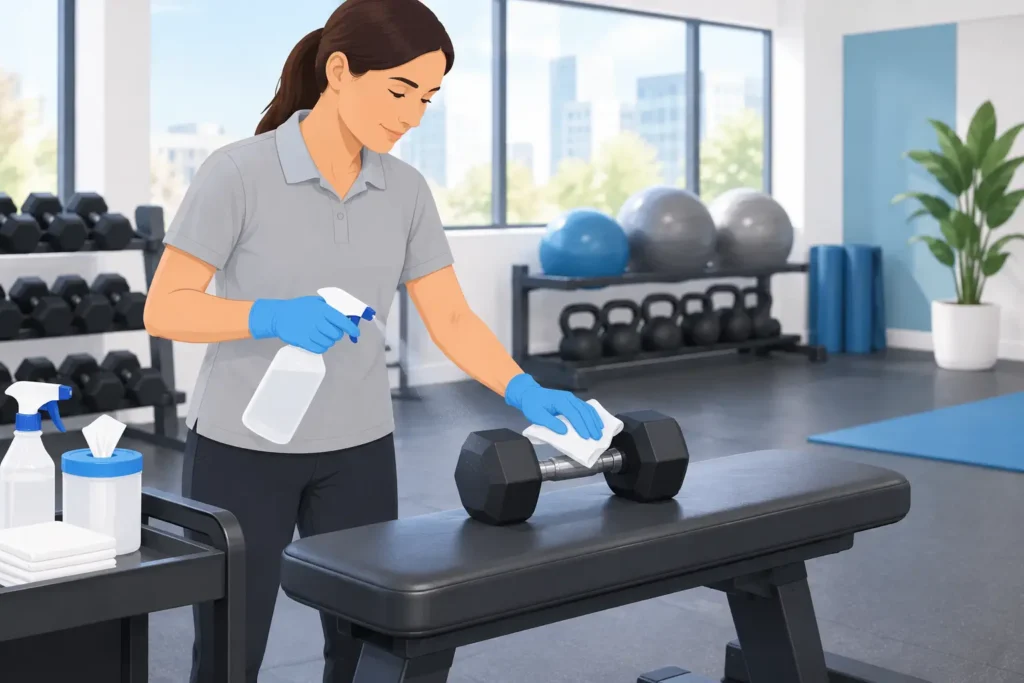
A shared CPR manikin, a workshop simulator or a box of OOSH sports gear can pass through many hands in one day. When you disinfect training equipment, the aim is not to make a room smell strongly of product. It is to keep frequently handled items and the spaces around them clean, safe to use and ready for the next group without interrupting learning.
For RTOs, early learning centres and workplaces that run regular inductions or practical sessions, this needs to be a repeatable routine. The right approach depends on the equipment, the manufacturer’s care instructions, who uses it and how often it is shared.
Cleaning and disinfecting are different jobs
Cleaning removes visible dust, soil, food residue and grime. Disinfecting applies a suitable product for the stated contact time to reduce microorganisms on a surface. In most cases, equipment should be cleaned before it is disinfected. Applying disinfectant over dirt or residue is less effective and can leave equipment unpleasant or unsafe to handle.
Not every item needs disinfecting after every use. A training room table used for a short presentation may only need its normal nightly clean, while shared goggles, touchscreens, hand tools or role-play equipment may need attention between groups. The frequency should reflect the activity, number of users and the site’s own hygiene procedures.
For an RTO, that distinction matters during practical training. For a childcare centre, it matters around shared resources, especially items that may be handled closely or placed near mouths. In an office, it may apply to shared induction devices, demonstration equipment, keyboards and meeting-room touchpoints.
Identify the equipment people actually touch
The most useful checklist is based on use, not on the room name. Walk through the training area at the end of a session and look for the points where hands, faces, footwear or personal protective equipment have made contact.
In a training facility, common items include desks, chairs, keyboards, tablets, touchscreens, headsets, whiteboard markers, remote controls, practice tools, safety glasses, hard hats and equipment controls. Practical workshops may also have reusable demonstration pieces, hand tools and storage handles.
At an early learning centre or OOSH service, shared toys, craft tables, play equipment, sports gear, tablets and cupboard handles deserve attention. The National Quality Framework and National Quality Standard, particularly Quality Area 2: Children’s health and safety and Quality Area 3: Physical environment, set clear expectations around maintaining safe, clean environments. A documented cleaning routine can support those expectations, but it does not replace a service’s own policies or guarantee compliance.
For workplaces, do not overlook training rooms that are only used occasionally. A boardroom used for monthly inductions can gather dust between sessions, while shared pens, AV controls and chair arms receive concentrated use when it is occupied.
How to disinfect training equipment safely
A sensible process is consistent, but it should be adjusted for the item in front of you.
Start with the manufacturer’s instructions
Before selecting a product, check what the equipment manufacturer permits. Electronics, soft furnishings, coated surfaces, safety equipment and specialised training aids can be damaged by unsuitable chemicals or excess moisture. A sprayed product may seep into a touchscreen, while harsh chemicals can affect plastics, labels, straps or protective coatings.
Use a product labelled as suitable for the relevant surface and follow its directions for dilution, application and contact time. More product is not necessarily better. Nor is wiping it away immediately if the label requires the surface to remain wet for a particular period.
Where children may access the item, centre procedures should also guide product selection, storage and when equipment can return to use. Keep chemicals secured and allow surfaces to dry fully before use.
Remove soil first, then treat touchpoints
Use a clean cloth or disposable wipe to remove visible dirt and residue. Then apply the disinfectant as directed, concentrating on the points people hold or operate. For a shared headset, that may include the headband, ear cups and controls, provided the manufacturer allows it. For a training tool, it may be the grip, trigger, switches and carrying case handle.
Use colour-coded cloths where your site procedure requires them, and change cloths when they become soiled. Reusing one cloth across equipment, amenities and food areas defeats the purpose of a careful routine.
Let the equipment dry and reset the space
Once the required contact time has passed, allow the item to dry before storing or issuing it again. Return equipment to its allocated place so the next trainer can see what is ready for use. This small reset prevents a common problem: clean items and used items being placed together with no clear distinction.
For high-turnover sessions, staff may need a simple between-group wipe-down process, while the after-hours cleaning team completes the broader room clean. Trying to make one person responsible for every task often leads to gaps when the timetable gets busy.
Build the routine around your timetable
The best cleaning schedule is one that matches how your site operates. A five-night-a-week after-hours clean suits many busy centres and training campuses, but it does not remove the need for staff to manage immediate spills, bodily fluid incidents or equipment handling between sessions under their internal procedures.
Set out what happens daily, weekly and during closures. Daily tasks may cover floors, bins, touchpoints, training benches and shared equipment. Weekly tasks may include detailed cleaning of storage shelving, chair bases, AV cabinets and less frequently used equipment. School holiday and Christmas shutdown periods are useful for deeper work such as carpet steam cleaning, internal glass and a full clean of cupboards and training stores.
In Newcastle and Lake Macquarie, sand and grit tracked in from beaches, parks and car parks can quickly mark floors and work its way into equipment storage areas. Humid summers can also make damp cloths, poorly aired rooms and wet cleaning equipment a problem. Drying, laundering and storing cleaning materials correctly is as practical as choosing the right disinfectant.
Coastal salt air can leave a film on windows and external entry glass, particularly around areas such as Newcastle CBD, Merewether and Belmont. While that is separate from disinfecting equipment, clean entry points and floors help keep dirt from travelling into training spaces.
Make responsibilities clear in the scope of works
A cleaning contractor can provide dependable after-hours cleaning, but only if the agreed scope of works identifies the equipment, frequency and method. “Clean training room” is too broad when the room contains specialist gear, electronics or equipment that moves between classrooms.
During an on-site inspection, identify what is fixed in place, what staff will clean between sessions and what requires a specific product or manufacturer-approved method. Make sure the contractor has access to storage areas and knows whether equipment can be unplugged, moved or opened. For childcare and education sites, confirm that cleaners hold the required police check and Working With Children Check (WWCC).
A clear scope also gives managers a practical way to check that work has happened. Visit records, checklists and technology-verified check-in and check-out provide useful accountability, particularly for multi-site providers or sites with limited evening supervision. They are not a substitute for inspecting outcomes, but they give you a reliable record to follow up if a concern is raised.
For RTOs, regular cleaning supports an orderly learning environment alongside the standards and procedures overseen by ASQA. For offices and strata common areas, it supports WHS obligations by reducing avoidable clutter, grime and trip hazards around shared facilities. SafeWork NSW guidance, your risk assessments and internal procedures should remain the basis for decisions about specialised equipment or hazardous materials.
Review the routine when the room changes
New equipment, a fit-out, a larger class size or a different course can change the cleaning requirement overnight. Review the routine after introducing new simulators, moving into another training room or receiving repeated feedback that a particular item is not being cleaned well enough.
A typical example is an RTO adding more tablet-based assessments. The floor and desks may still be cleaned each evening, but the added devices create new touchpoints, charging stations and storage requirements. Adjusting the scope early is simpler than trying to resolve complaints later.
For facilities across Newcastle, Lake Macquarie and the lower Hunter, Newcastle Cleaning Co can inspect the site and set out an after-hours scope that reflects the equipment and timetable you actually have. The useful question is not whether every surface can be disinfected at once. It is whether each shared item has a clear, safe and workable routine before the next group arrives.