
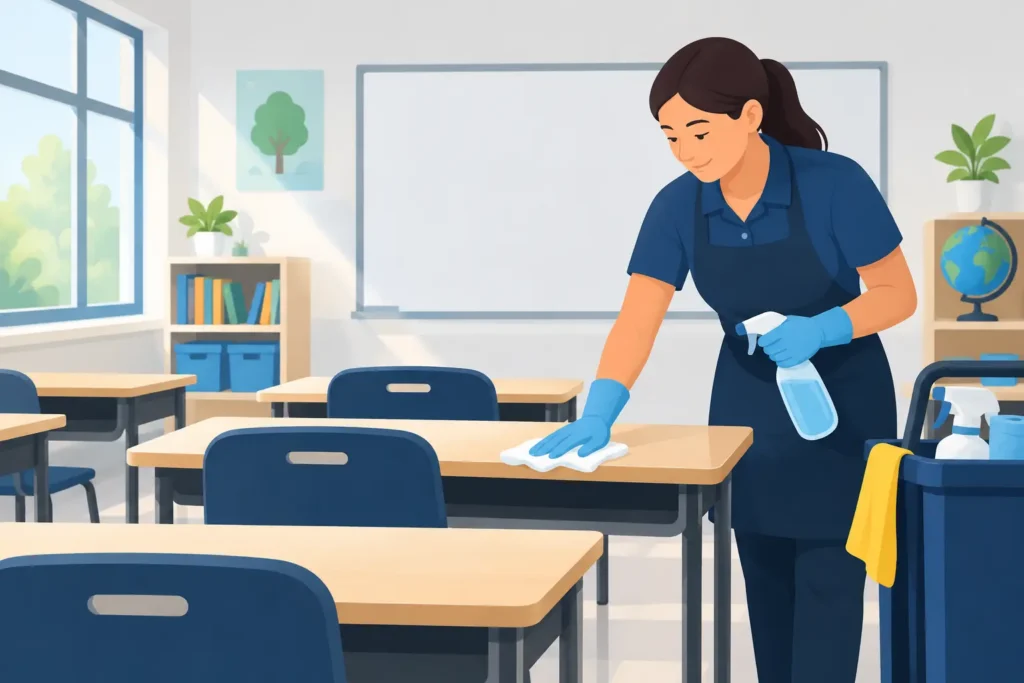
A classroom can look tidy while still carrying the day’s highest hygiene risks. Shared desks, door handles, devices, chairs and bathroom touchpoints are used repeatedly by students and staff, often within a short period. Clear classroom cleaning priorities help education providers protect the people using those spaces while maintaining the professional, ready-for-learning environment families, students, educators and auditors expect.
For preschools, childcare centres and Registered Training Organisations, cleaning is not simply a matter of appearance. It supports daily operations. The right priorities reduce avoidable hygiene issues, keep high-use spaces presentable and ensure cleaning effort is focused where it makes the greatest difference.
Start with the areas people touch most
High-touch surfaces should sit at the top of any classroom cleaning plan. These are the surfaces that pass through the hands of many people each day: door handles, light switches, desk tops, chair backs, cupboard pulls, tap handles, handrails and shared equipment.
In a childcare or preschool setting, this also includes low-level surfaces within children’s reach. Small hands move from tables to toys, floors and faces quickly, so careful cleaning of child-accessible touchpoints deserves particular attention. The task is not merely to make the room look clean at closing time. It is to leave it hygienic and ready for the next group.
For RTO classrooms, shared keyboards, training equipment, reception counters and sign-in areas need the same disciplined approach. These spaces may host different cohorts throughout the week, making consistent cleaning standards especially valuable. In office training rooms, the focus is similar: desks, meeting tables, presentation controls and shared amenities all influence staff confidence and visitor impressions.
The exact frequency depends on how a room is used. A classroom with multiple sessions, young children or shared practical equipment will usually need more attention than a room used by one small group. A reliable cleaning provider can help identify those differences during a site inspection rather than applying the same schedule to every room.
Keep bathrooms and handwashing areas ahead of the day
Bathrooms and handwashing stations have an outsized effect on how people judge a facility. If these areas are not clean, supplied and fresh, the rest of the building can feel neglected – regardless of how well the classrooms are presented.
Daily attention should cover toilets, basins, taps, dispensers, mirrors, doors and floors, along with rubbish removal and replenishment of agreed consumables. Floors deserve close attention in particular, as moisture and tracked-in dirt can create both a poor appearance and a slip risk.
Childcare facilities may need additional focus on nappy-change areas, child-height fixtures and the separation of cleaning tools used in bathrooms from those used elsewhere. Education providers should also consider peak-use times. A bathroom cleaned only after hours may still need a daytime check when enrolments are high or events bring extra people onsite.
Treat floors as a safety and presentation priority
Floors collect what every other surface sheds: dirt, food crumbs, dust, paper, moisture and debris from outdoor areas. They are also one of the first things visitors notice. A clean floor makes a classroom feel calm and cared for; a marked or gritty floor can make even a well-equipped space feel tired.
Daily vacuuming, sweeping or mopping should be matched to the flooring type and traffic level. Entry points, eating areas, corridors and wet zones generally need the closest attention. In preschools, food and craft activities can create more frequent spot-cleaning needs. In RTOs, practical training rooms may have site-specific requirements based on the equipment, materials or activities used there.
This is where a one-size-fits-all schedule often falls short. Cleaning hard floors too aggressively with the wrong product can affect their finish, while leaving carpets without regular detailed care can lead to stains and lingering odours. The goal is a planned routine that keeps flooring safe, clean and presentable without causing unnecessary wear.
Do not let rubbish, food and odours build up
Classroom bins may seem like a minor task, but they can quickly affect hygiene and comfort. Food scraps, tissues, packaging and craft waste can create odours or attract pests if left overnight. Bins should be emptied as agreed, liners replaced and the bins themselves cleaned when needed rather than only when they become visibly soiled.
Staff kitchens, student break areas and lunch spaces need a similarly dependable routine. Benches, sinks, appliances, tables and floors should be cleaned according to use. Where food is prepared or consumed by young children, prompt attention to spills and waste matters even more.
Odours are useful warning signs. They may point to a missed bin, damp mop head, poorly ventilated bathroom or spill beneath furniture. A trained cleaning team does not simply mask an odour. They identify the likely source and address it, or report an issue that needs facility maintenance.
Build cleaning around the way learning actually happens
The best classroom cleaning priorities reflect the timetable, not just the floor plan. A preschool may need cleaners to work after children have left, while an RTO may run evening sessions, weekend assessments or short courses with fast turnarounds. Corporate training areas might need to be reset before a morning meeting or after a late workshop.
Flexible scheduling protects learning time and avoids unnecessary disruption. It also allows for a practical division between routine daily work and periodic tasks such as internal glass cleaning, detailed carpet care, high dusting or cleaning behind movable furniture.
Clear communication is essential when needs change. An open evening, parent visit, audit, enrolment day or practical assessment may call for additional duties. A cleaning partner should be able to respond to those site-specific requests without the facility manager having to rebuild the entire cleaning arrangement.
Make accountability part of the standard
A cleaning scope only works when it is completed consistently. Decision-makers need confidence that scheduled work has been attended to, particularly in facilities where hygiene, security and compliance are closely connected.
Practical accountability may include agreed cleaning specifications, regular quality checks, clear reporting of maintenance concerns and site attendance records. Technology-tracked check-in and check-out provides an additional level of reassurance that cleaning staff attended the site as scheduled. It is a straightforward measure, but one that supports better risk management and clearer conversations if an issue is identified.
For childcare and education environments, staff suitability matters as much as process. Police-checked staff and Working With Children Checks, where required, help facility leaders manage access responsibly. The cleaning team should also understand site rules, sign-in procedures, alarm requirements and the importance of securing classrooms when work is complete.
Balance visible results with the tasks people do not see
A polished reception area and clean classroom tables create immediate confidence, but the less visible work is equally important. Dust on high ledges, debris under furniture, marks on skirting boards and neglected corners gradually affect air quality, presentation and the overall condition of the site.
A dependable schedule should include both the visible daily essentials and planned detail work. The balance will depend on the site. A busy childcare centre may place greater emphasis on sanitation of child-accessible areas, while an RTO may need additional attention to student amenities, training rooms and auditor-facing spaces. An office with regular visitors may prioritise entry areas, meeting rooms and shared kitchens.
The key is not to chase a generic checklist. It is to define what a clean, safe and presentable result looks like for your facility, then have trained staff deliver it consistently.
For education providers across Newcastle and the Greater Hunter Region, Newcastle Cleaning Co. approaches cleaning as practical operational support. A site inspection allows the cleaning schedule to reflect the room use, operating hours and priorities that matter to your organisation.
A well-cleaned classroom gives educators and students one less thing to think about. When high-use areas are hygienic, bathrooms are cared for and the room is ready before the next session begins, the space can do what it is meant to do: support focused, confident learning.