
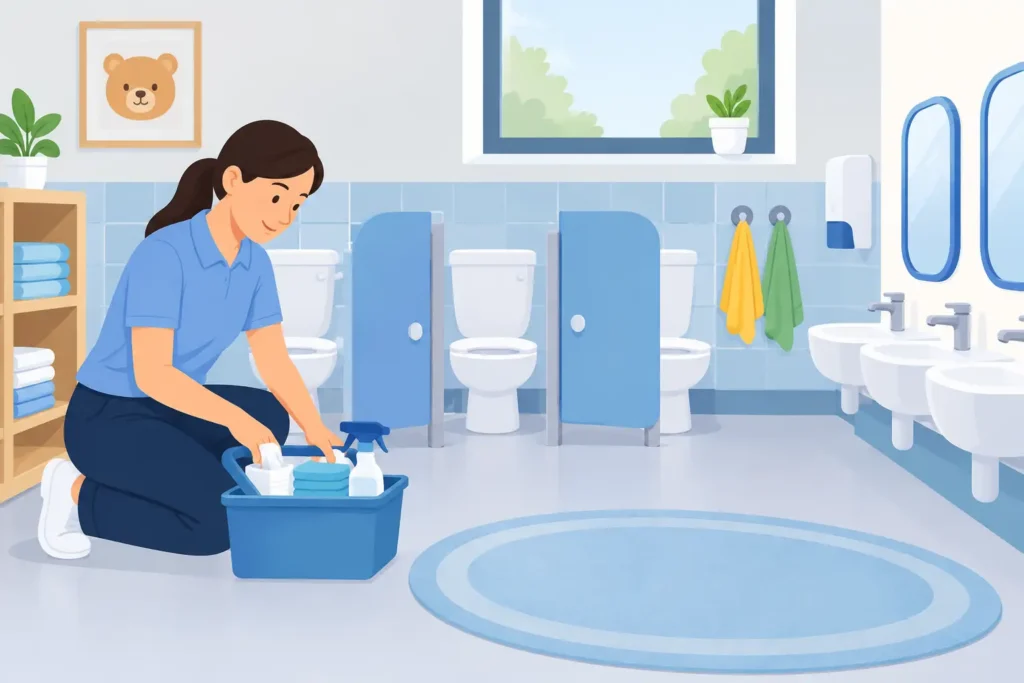
A childcare bathroom can look tidy at first glance and still be unsuitable for the next group of children. A damp floor, an empty soap dispenser or a missed nappy-change surface can quickly affect safety, hygiene and parent confidence. To prepare childcare bathrooms properly, centres need a clear routine that covers cleaning, restocking, checks and prompt follow-up when something is not right.
Bathrooms are high-use spaces where children are learning independence, educators are managing busy transitions and germs can move easily between hands, surfaces and shared fixtures. Preparation is not simply a morning task. It is a practical system that keeps the room safe and ready throughout the day.
Prepare Childcare Bathrooms Before Children Arrive
Start with a visual check before the first children enter the room. Floors should be dry and free of rubbish, paper, hair and any items that may create a slip or trip risk. Check that toilet seats, flush buttons, taps, basins and door handles are visibly clean, as these are among the surfaces children and educators touch most often.
Next, confirm that essentials are available and easy for children to use safely. Soap dispensers should be full and working, hand-drying supplies should be stocked, and toilet paper should be accessible without being left on wet surfaces. If the room uses step stools, make sure they are stable, clean and positioned correctly. A loose stool or empty dispenser can interrupt supervision at an inconvenient moment.
The nappy-change area requires its own check. Ensure the mat is clean and dry, supplies are within educator reach but safely managed, and the rubbish bin is lined, operational and not overfilled. Any equipment that is damaged, difficult to clean or no longer functioning as intended should be removed from use and reported.
This first inspection is also the time to look for maintenance concerns. Slow-draining basins, leaking taps, loose toilet seats, faulty lights and damaged wall finishes can make cleaning harder and create ongoing hygiene issues. Cleaning teams can identify these concerns, but centre management should have a simple process for recording and arranging repairs.
Clean in the Right Order
A reliable cleaning routine should reduce the chance of transferring germs from dirtier areas onto cleaner ones. In practical terms, this means starting with higher, cleaner surfaces and progressing towards toilets, nappy-change areas and floors. Cleaning cloths and equipment used in bathrooms should be kept separate from those used in kitchens, classrooms and staff areas.
High-touch points need close attention. Taps, soap dispensers, flush buttons, toilet door locks, handles, grab rails and basin edges are easily overlooked when a bathroom is being cleaned quickly. They should be cleaned using products suitable for childcare settings and used according to the manufacturer’s instructions, including required contact time where applicable.
Disinfection has a role, particularly on high-touch and bodily-fluid-contaminated surfaces, but it does not replace physical cleaning. Dirt and residue need to be removed first. Product choice matters too. Strong fragrances or harsh chemicals may not be appropriate for every surface or setting, and products must be stored securely away from children.
Floors deserve more than a fast mop. They should be cleaned using a method that removes visible soil, with particular attention around toilets, basins and nappy-change stations. Allow enough drying time before children return. If a spill occurs during the day, isolate the area, clean it promptly and maintain supervision so children do not walk through a wet zone.
Keep nappy-change hygiene separate
Nappy-change areas need a routine that is distinct from the general bathroom clean. The surface should be cleaned and disinfected between children, with gloves and disposable materials managed safely. Educators also need convenient access to handwashing immediately after each change.
The room’s layout affects how consistently this happens. When supplies are poorly placed, bins are too small or handwashing facilities are awkward to reach, staff may lose precious time during a busy routine. Reviewing the layout with the people who use it every day can identify small changes that improve both hygiene and workflow.
Restock for the Whole Session, Not Just the Morning
A bathroom can be prepared well at opening and still fall short by lunchtime. Centres should estimate supply use based on enrolment numbers, toilet-training stages, meal times and the length of each session. A room used by toddlers will have different demands from one used by preschool-aged children.
Rather than waiting until supplies are completely empty, set a clear restocking point during the day. Educators can report low supplies as part of room handovers, while cleaners can replenish agreed consumables during scheduled visits. This shared responsibility prevents the common problem of discovering empty soap or paper supplies at the busiest time of day.
Keep reserve stock in a secure, clearly labelled location. The aim is not to overfill every dispenser or cupboard. Excess stock can become cluttered, difficult to monitor and accessible to children if it is not managed correctly. A sensible par level gives staff enough supplies to respond without turning the bathroom into a storage area.
Build Bathroom Checks Into Daily Operations
A written checklist helps turn good intentions into consistent standards. It should be simple enough for staff to use, but specific enough to show what has been checked. For most centres, a bathroom check should cover cleanliness, dry floors, working taps and toilets, soap, paper, rubbish, nappy-change readiness and any maintenance issues.
The frequency depends on the number and age of children, the room layout and how heavily each bathroom is used. A smaller preschool may only need a few scheduled inspections alongside responsive cleaning. A larger long day care centre may need checks at opening, after key transitions, after lunch and before afternoon collection.
A checklist is not useful if it is completed without looking closely. Team leaders should occasionally verify the condition of bathrooms at different times, especially after high-use periods. This provides a clearer picture of whether the routine is realistic, whether supplies are adequate and whether cleaning schedules need adjustment.
Plan for unexpected incidents
Children’s bathrooms are not predictable spaces. Toileting accidents, vomiting, blocked toilets and water spills require an immediate, calm response. Centres should have clear procedures, appropriate personal protective equipment and a designated way to keep children away from the affected area while it is cleaned.
For larger incidents, it may be necessary to temporarily close a bathroom until it is safe to reopen. Trying to keep every facility available at all costs can create a greater risk. The better approach is to have a contingency plan, communicate with educators and ensure another suitable bathroom can be accessed under supervision.
Work With a Cleaning Provider Who Understands Childcare
Daily educator checks and scheduled professional cleaning serve different purposes. Educators manage the immediate needs of children during the day, while a trained cleaning team can complete thorough routine cleaning at a time that causes minimal disruption. The strongest result comes when both sides understand the site’s expectations and communicate clearly.
Before engaging a cleaner, identify the tasks that matter most to your centre. This may include detailed bathroom cleaning, high-touch surface attention, rubbish removal, nappy-change area cleaning, consumable replenishment or additional cleaning after events. Be clear about access arrangements, alarm procedures, storage, site-specific risks and which staff member can authorise extra duties when needed.
For childcare facilities, trust and accountability are as important as the cleaning schedule. Ask how attendance is tracked, how quality concerns are handled and whether staff working on site have appropriate checks available. Newcastle Cleaning Co. provides scheduled cleaning with trained staff, technology-tracked site attendance and Working With Children Checks available for education settings, helping centres maintain dependable standards without adding unnecessary pressure to educators.
A clean bathroom supports more than compliance. It gives children a safer place to build everyday self-care skills, helps educators keep routines moving and reassures families that care extends to the details they may not always see. The most effective preparation is the routine your team can maintain consistently, even on the busiest day.