
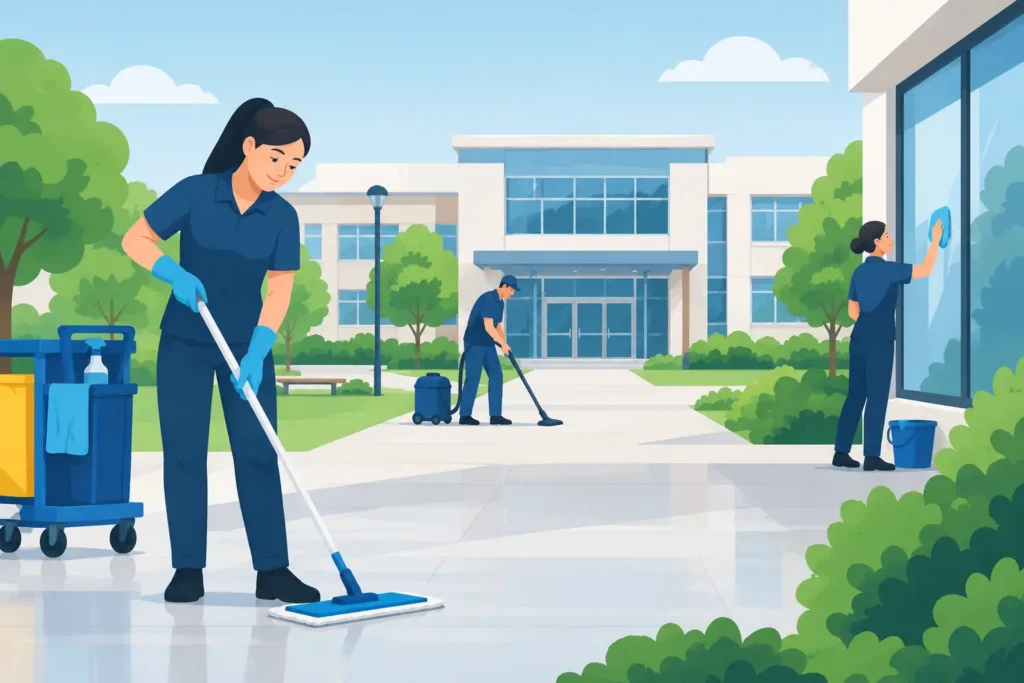
A training campus cleaning example is most useful when it reflects the real rhythm of an RTO: students moving between classrooms, practical spaces in regular use, trainers preparing for the next session and visitors forming an impression from the moment they arrive. Cleaning needs to support those activities without creating disruption or leaving important details to chance.
For Registered Training Organisations, a clean campus is more than a presentable building. It supports a professional learning environment, helps maintain hygiene in shared areas and gives staff confidence that rooms are ready for delivery, assessment and inspection. The right scope will vary by campus, but the example below shows how a dependable scheduled service can be organised.
What a training campus cleaning example should cover
Consider a medium-sized RTO operating five days a week with reception, administration offices, several classrooms, a student breakout area, amenities and a practical training room. Student numbers rise and fall through the week, with evening classes held twice weekly and occasional external assessors visiting the site.
The cleaning plan begins with an inspection of how the premises are actually used. A classroom used for computer-based learning has different needs from a simulated workplace, workshop or beauty training area. Likewise, a campus with a busy student kitchen needs more frequent attention to food preparation surfaces, bins and floors than one where students leave the site for breaks.
Rather than applying the same checklist to every room, the cleaning provider and campus manager agree on clear standards for each area. This keeps expectations practical and makes it easier to identify when the scope needs to change.
Daily attention to the spaces people notice first
At the end of each teaching day, cleaners attend to the areas that affect hygiene, comfort and presentation most directly. Reception counters, door handles, light switches, shared desks and other high-touch surfaces are cleaned and disinfected as required. Rubbish is removed, floors are vacuumed or mopped, and amenities are cleaned, restocked and checked for odour or visible marks.
Classrooms are reset for the next session. This may include wiping desks, cleaning whiteboards, arranging chairs neatly and removing rubbish left behind after classes. In computer rooms, cleaning needs to be carried out carefully around keyboards, screens and equipment, following the campus requirements for approved products and methods.
The goal is straightforward: trainers should walk into rooms that feel ready for teaching, while students should see a campus that is orderly and cared for. Small details matter here. Smudged glass at reception, overflowing bins or marked tables can quickly undermine an otherwise professional setting.
Regular deep-cleaning tasks that protect the standard
Some work does not need to happen every night, but it should not be left until it becomes an obvious problem. A scheduled weekly or periodic program can include detailed dusting of ledges and skirting boards, cleaning internal glass, spot-cleaning walls and doors, and more thorough attention to kitchenettes and breakout areas.
Carpets may need periodic spot treatment or deeper cleaning, particularly in high-traffic corridors and classrooms. Hard floors may require machine cleaning depending on their surface and daily foot traffic. The appropriate frequency depends on the number of students, the type of training delivered and the condition expected by the organisation.
For example, a campus delivering hospitality, health, childcare or hands-on trade training may require more frequent cleaning in specialised rooms. Those spaces can have their own cleaning instructions, storage needs and safety considerations. A reliable provider will clarify those requirements before work begins rather than assuming a standard office routine is enough.
Scheduling around learning, not against it
Timing is often the difference between an effective cleaning arrangement and a frustrating one. Most RTOs need cleaners to work after classes, early in the morning or during quieter windows between sessions. The best schedule is one that protects the learning environment while still allowing cleaners enough time to complete the agreed work properly.
In this training campus cleaning example, the main clean takes place after afternoon classes. On evenings when the campus runs later sessions, cleaners attend after close. Amenities and breakout spaces receive additional attention after periods of heavy use, while periodic tasks are booked during low-enrolment weeks or school holiday periods where suitable.
Flexibility is valuable, but it should not mean uncertainty. A campus manager should know when the team is due onsite and what will be completed. Technology-tracked check-in and check-out provides useful accountability, particularly where cleaning is completed outside normal office hours.
Quality checks make the service dependable
A written scope provides the starting point, but quality checks keep the standard consistent over time. For an RTO, this may involve regular communication with the campus manager, documented cleaning expectations and prompt action if a room needs additional attention before an event, audit or enrolment day.
The campus contact might identify that a particular classroom is being used more heavily than expected, or that a student common area now needs an extra clean each week. These are normal changes in an active training environment. A cleaning provider should be willing to accommodate additional site-specific duties where practical, rather than treating every request as outside the arrangement.
It is also sensible to consider who is entering the campus after hours. Trained staff, police checks and clear site access processes support risk management and give managers greater peace of mind. Where a training organisation shares premises with childcare or delivers programs involving young people, Working With Children Checks may also be relevant.
Choosing the right scope for your RTO
There is no single cleaning frequency that suits every campus. A small provider with low student numbers may only require several scheduled visits each week. A larger site with daily classes, student kitchens and high visitor traffic may need daily cleaning, plus regular detailed work in particular areas.
When reviewing a proposed scope, consider the volume of people onsite, the rooms used most heavily, whether food is prepared or served, the nature of practical training, and the standard expected by students, staff and auditors. It is also worth considering peak periods such as new intakes, open days, assessments and compliance visits.
The cheapest-looking option can create more work for staff if standards are inconsistent, jobs are missed or the scope is too vague. Fixed-price, end-result billing gives a campus manager clearer expectations about the agreed outcome, rather than uncertainty about time spent onsite. What matters is that the cleaning plan is realistic, visible and properly resourced.
A clean campus supports confidence every day
For RTO managers, cleaning should be an operational support service that quietly helps the campus run well. It should protect the condition of shared facilities, reduce the burden on trainers and administrators, and reinforce the professional standard students expect from their training provider.
Newcastle Cleaning Co. works with organisations across Newcastle and the Greater Hunter Region that need reliable staff, flexible scheduling and attention to detail. An onsite inspection is the practical first step, because the strongest cleaning plan is built around the way your campus actually operates.
A useful final test is simple: if an assessor, prospective student or employer walked in tomorrow, would every shared space show that your organisation is prepared, professional and ready to teach?